

Chinese humanoid robot smashes Usain Bolt’s 100m world record
Lightning reaches peak speed of 14.5 metres per second during test run
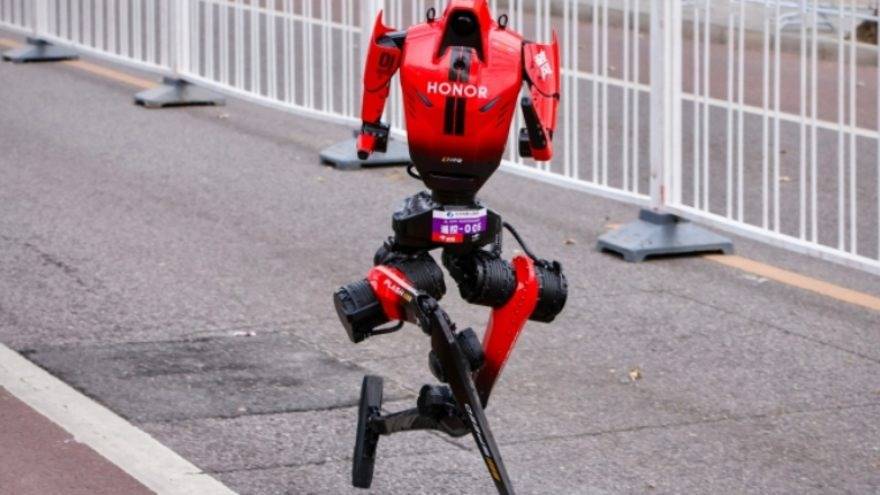
BEIJING – A humanoid robot has beaten the men’s 100-metre world record in Beijing, highlighting the rapid advances in robotic technology.
The machine, developed by Chinese smartphone maker Honor, completed the distance in 9.32 seconds during a preparatory test for the World Humanoid Robot Games on Saturday. The performance was faster than the 9.58 seconds recorded by Jamaican sprinting great Usain Bolt in Berlin in 2009.
The robot, named Lightning, reached a peak speed of 14.5 metres per second during the test, according to China Central Television. Xinhua News Agency separately reported that a humanoid robot clocked 9.39 seconds during the opening ceremony of the Games at Beijing’s National Speed Skating Oval.
9.32s in testing. 14.5 m/s peak speed. ⚡
— HONOR (@Honorglobal) August 22, 2026
HONOR Robotics D1 pushed past human speed limits in 100m trials! ????????
Watch out for more exciting moments tonight at the 2nd World Humanoid Robot Games!
The power, cooling, and reliability tested on the track are coming to the… pic.twitter.com/aw2cgkcJVx
World Humanoid Robot Games
The second edition of the World Humanoid Robot Games features 51 events and 1,301 competitions, attracting 666 teams and 2,056 humanoid robots from around the world. The number of participating teams has risen 138 percent from last year’s inaugural edition.
Alongside athletics and football, this year’s programme includes weightlifting, tug-of-war and table tennis. Scenario-based competitions are also designed to test robotic applications in logistics, hospitality and household services.
Lightning previously won the Beijing E-Town half-marathon in April, completing the 21-kilometre course in 50 minutes and 26 seconds in autonomous navigation mode. The robot was 169cm tall with 95cm legs at the time, while its legs have since been lengthened by 10cm to 1.05 metres.
Robotics push
The Games run from Saturday to Wednesday at the National Speed Skating Oval, known as the “Ice Ribbon”, which hosted events during the Beijing 2022 Winter Olympics. China has been promoting humanoid robotics as a strategic emerging industry, with development focused on manufacturing, logistics and consumer applications.